
in 2026 we shall be providing a blog per month that has property related seasonal content NOW February
Navigating the Flip: Essential Due Diligence for Property Purchasers
It all begins with an idea.
Navigating the Flip: Essential Due Diligence for Property Purchasers
Whether you are a prospective developer eyeing a project, or a purchaser looking for a new home, the property market is governed by one timeless principle: Caveat Emptor: Buyer Beware.
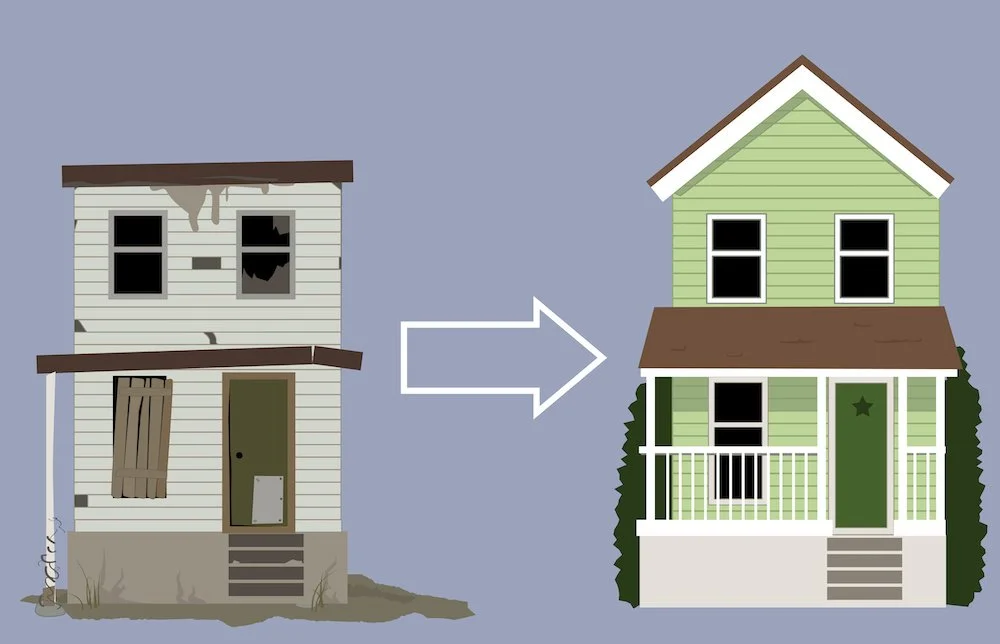
In today's market, "flipped" properties (homes bought, renovated quickly, and resold for profit) are common. While there is nothing inherently wrong with a developer making a profit, the methods used to achieve that profit can sometimes compromise the quality of the home.
As a buyer, you must be vigilant. There are specific, practical steps you can take to peel back the layers of a renovation and ensure your investment is sound.
Who is really selling the property?
The first step in due diligence is understanding the seller. Are you buying from a long-standing owner who has cherished the home for decades, or a limited company that acquired it six months ago?
This information is not a secret; it is a matter of public record. For a small fee (typically around £3 to £9), anyone can access the Land Registry. By obtaining the Title Register and title plan, you can instantly see:
The owner's identity: is it an individual or a corporate entity?
The purchase date: did they buy it recently?
The price paid: how much did they pay compared to the current asking price?
There is nothing wrong with a company making a "reasonable" profit. However, seeing the difference between the purchase price and the current asking price gives you crucial context. If the markup is massive but the ownership period was short, you need to ask: where was that money spent? Was it on high-quality structural improvements, or just surface-level aesthetics?
How does the "race for profit" impact building quality?
Property development is often a race against time. Developers operate under strict constraints. Quotations for materials and labour are often valid for only a short period, and in the last five years, inflation has caused these costs to skyrocket.
Also, many developers are working with investors' money. They have promised a specific return on investment (ROI) by a specific date. This creates pressure to finish the job at pace.
When speed is the priority, quality can suffer. An investor-led deadline might mean materials are not allowed to cure properly, or cheaper alternatives are swapped in to protect margins. As a buyer, you must be aware that the shiny finish might be masking rushed workmanship driven by financial pressure rather than craftsmanship.
What free checks can I do before a survey?
Beyond the Land Registry, your local Local Authority offers a rich source of free information. The Planning and Building Control records are typically available online at no cost.
Use these records to compare the "before" and "after."
Planning permission: look at the submitted plans. Do they match the layout of the house as it stands today?
Building regulations: crucially, were the works signed off? Did the developer obtain a Completion Certificate?
If the physical property differs from the approved plans, or if there is no record of Building Control sign-off for a removed wall or new extension, you are looking at a major red flag.
Why isn't a standard RICS survey enough?
At this stage, professional advice is non-negotiable. However, many buyers make the mistake of opting for the cheapest survey available, assuming it covers everything. It does not.
The Royal Institution of Chartered Surveyors (RICS) offers three distinct levels of survey. Each comes with strict terms and conditions defining what is, and more importantly, what is not included.
Level 1 (Condition Report): basic traffic light ratings.
Level 2 (HomeBuyer Report): more detail, but non-intrusive.
Level 3 (Building Survey): the most comprehensive inspection.
I have been asked to review properties where a buyer felt their surveyor "missed" important items. Upon investigation, it often turns out the surveyor didn't miss anything based on the type of survey commissioned. You get what you pay for.
At 'By Julian', we go beyond the standard RICS scope. We apply a forensic eye to the property. In one instance, my structural review was found to be more thorough than that of a dedicated structural engineer engaged by a householder. When you are risking hundreds of thousands of pounds as a cash buyer or through a mortgage, you cannot afford to take anything for granted.
What are the final checks before exchange?
The final safety net is the legal process. Vendors are legally required to make specific statements about the property, including disputes and outstanding issues.
Do not skim-read these documents. Double-check with your conveyancing team that every statement aligns with what you know. If the vendor claims "no works have been undertaken" but you found a planning application from last year, investigate immediately.
Buying a flipped property can feel like swimming with sharks, but you don't have to be the prey. By gathering the right competencies, including legal checks, forensic surveying, and thorough research, you can de-risk the process. Remember, it is "all of the Law, all of the time." By Julian is here to help you make informed, safe decisions.
Julian Carter is the founder of By Julian, a consultancy providing services in civil engineering, structural engineering, emergency engineering, education and training, information technology and expert witness.
Buying property? Why 'buyer beware' requires a forensic approach
It all begins with an idea.
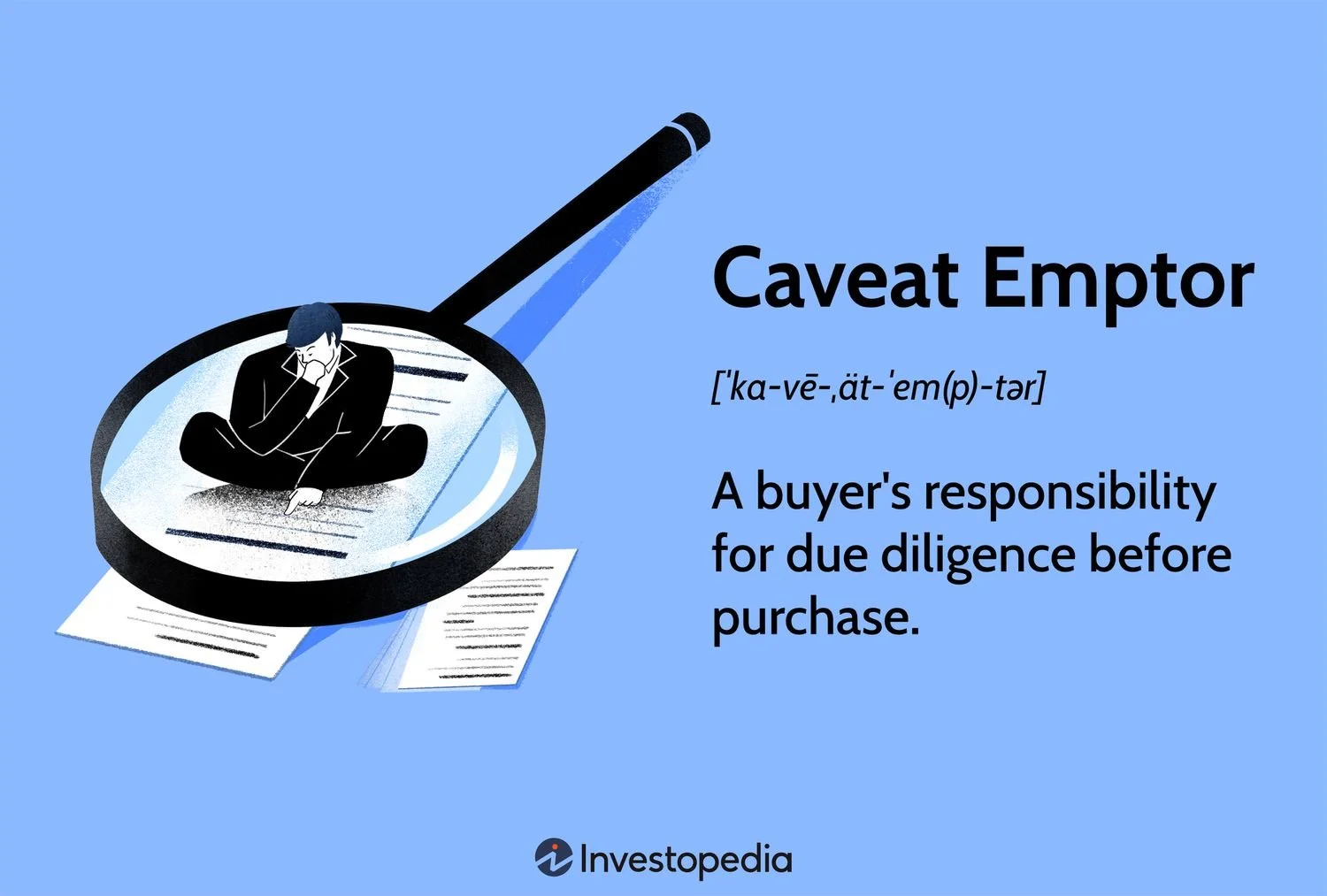
Purchasing a property is often the most significant financial commitment you will ever make. Yet, under English Law, the principle of caveat emptor, Buyer Beware, remains the governing rule. This places the burden of due diligence squarely on your shoulders. Too few buyers access the right information or fully understand the challenges selling agents face.
To reduce stress and de-risk your investment, you must invest in the right competencies. You need more than a quick glance; you need a forensic understanding of what you are buying.
How do modern building standards compare to traditional construction?
When we look at the UK’s historic cities, we see buildings that have stood for centuries. To understand why, we have to look at the intent behind the build. Even the ancient Egyptians understood the balance between cost and quality, often veneering cheaper timber with higher-quality wood.
In modern society, this balance between cost and affordability drives material selection. It is crucial to remember that Building Regulations set the minimum standards. These standards typically aim for a robust life of around 40 years before major maintenance is required. More recently, the British Board of Agrément (BBA) provides certifications with a qualified lifetime of just 25 years.
This creates a paradox: many "older" properties, though exceeding their life expectancy, remain in better condition than newer ones. Modern properties, designed to be passive and airtight to meet new energy regulations, can feel "less solid" than their Victorian counterparts and may lack the sheer longevity of traditional materials.
Why have construction methods changed over time?
Traditional Construction: historically, UK properties were built on a simple principle: "a stone upon a stone." As the Victorian era demanded mass housing, this evolved into large-scale brick production. Builders used specific "bonds" (like English, Flemish, or Common Bond) to create strength. Combined with timber to span gaps, these materials formed the typical detached and semi-detached homes we recognise today—low-rise, breathable, and durable.
The Post-War Shift: the post-war years created an urgent need for housing that traditional materials could not meet. Timber takes time to season; the country needed speed. This led to the rise of System Building, industrial methods using steel and concrete to manufacture "kit form" houses in factories.
To speed up production, accelerants like calcium chloride were added to concrete. Unfortunately, these additives were corrosive to the steel reinforcement inside, leading to early failure in both steel-framed and concrete-framed properties.
What are 'Non-Standard' properties and are they risky?
The 1980 Housing Act gave many people the "Right to Buy" these non-standard properties. However, the subsequent 1985 Housing Act declared a high percentage of them as "defective," forcing Local Authorities to demolish vast amounts of social housing.
Despite this, many non-standard properties remain standing and are occupied today. Buying one is not necessarily a mistake, but it requires a specific, forensic understanding of that building type. You must understand if the property is "defective" in the eyes of the law and lenders.
The technical framework for design is set by the UK Planning system and the Building Regulations (which, again, are minimum requirements).
Modern properties are increasingly designed to be passive: limiting solar gain, maximising insulation, and reducing air permeability (making them 'less porous'). While beneficial for energy efficiency, this often results in a property that feels less robust and "solid" than a traditional Victorian build. An additional factor to consider is overshadowing, particularly in high-density areas, as the outer walls of modern, airtight properties require adequate air circulation to prevent moisture issues. Maintaining garden space and ventilation becomes vital.
How does location impact a property's health?
A property does not exist in a vacuum. Its performance is dictated by its environment:
Exposure: is the house sheltered or exposed to driving wind and rain?
Solar Gain: does it receive enough sunlight, or is it overshadowed?
Breathability: modern homes are less porous to air. While this improves insulation, it means the outer walls need to breathe. Overshadowing by trees or other buildings can prevent this, leading to damp issues.
Why do you need a ‘forensic eye’ when buying a property?
Things are not always what they appear. A fresh coat of paint can hide a multitude of structural sins. To make a sound investment, you must be able to distinguish the cosmetic from the structural, and the active damage from the historic settlement.
This is where investing in competency pays off. You need an expert with a "forensic eye"—someone who understands the difference between a Victorian brick bond and a post-war concrete system. Services like those provided by 'By Julian' (The House Whisperer) help you navigate the 'Buyer Beware' landscape, ensuring your decision is based on fact, not just first impressions.
Julian Carter is the founder of By Julian, a consultancy providing services in civil engineering, structural engineering, emergency engineering, education and training, information technology and expert witness.